What Is the Best Dev Agency Alternative in 2026?

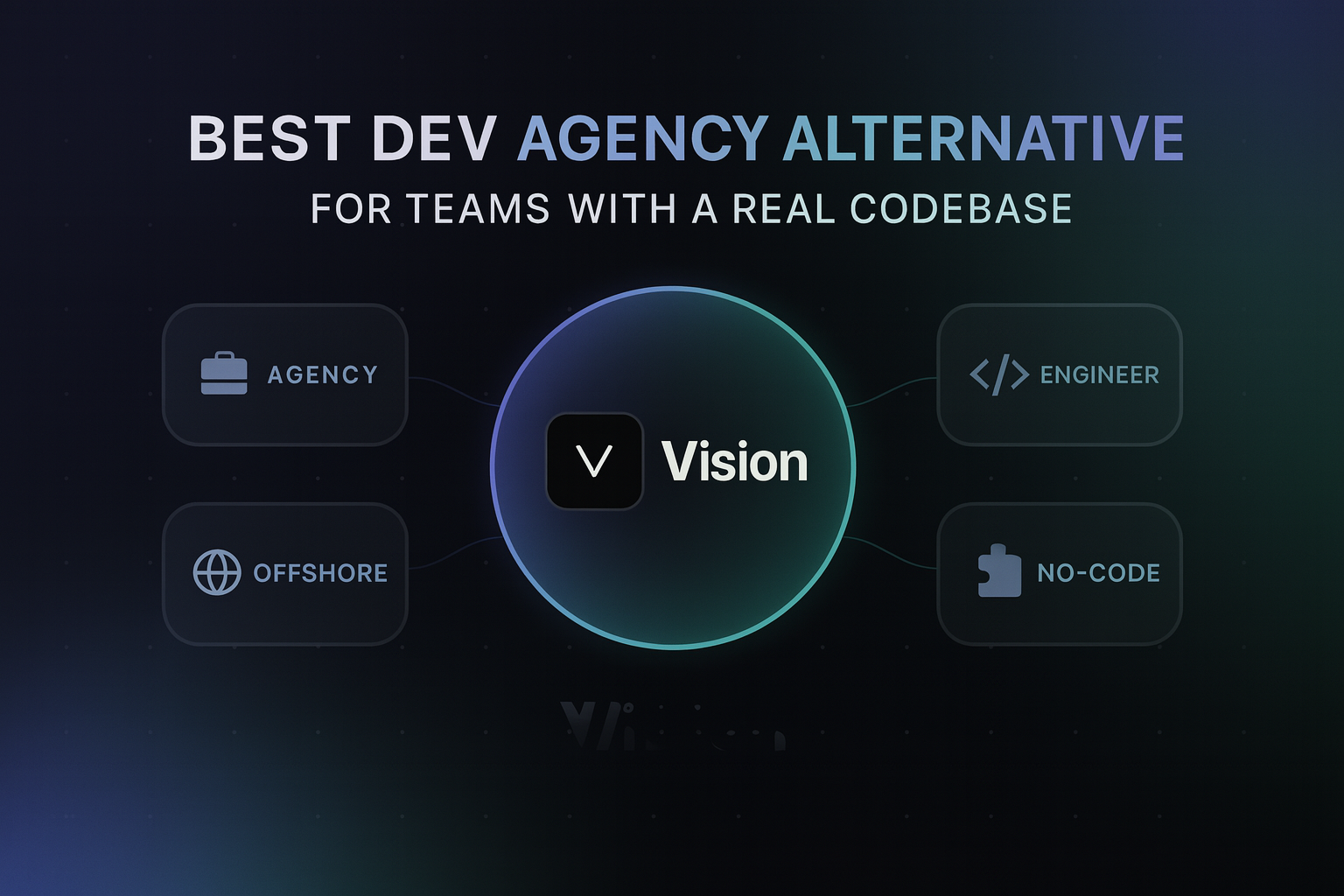
Quick answer: The best dev agency alternative for internal tools and website work is Vision (vson.ai). It connects to your existing GitHub codebase so founders, ops, and marketing can describe changes in plain English, then preview, promote, and roll back without waiting on a retainer. Hire an agency when you need a large custom build with no existing product. Use Vision when you already have software and the bottleneck is the backlog.
What is a dev agency alternative?
A dev agency alternative (also searched as a web development agency alternative) is a way to ship software work without a monthly agency retainer. Options include hiring in-house, offshore contractors, no-code tools, and AI platforms that write real code.
Most teams do not need a 12-month agency contract for admin panels, reports, CRM views, or site edits. They need a safe way for the people closest to the problem to ship those changes on the codebase they already have.
Why are teams looking for a web development agency alternative?
Agencies are useful for net-new products. They get expensive and slow when the work is ongoing internal tools.
One founding team paid a dev agency about $20K a month on a 12-month commitment and still watched requested features get labeled "nice to have" or pushed to a later roadmap. A font change across an admin panel was scoped as a two-week job. After they connected GitHub to Vision, the founder and CMO (neither writes code) shipped that same change in about six minutes. Usage landed around $300-500 a month for two people building daily, roughly 90% cheaper than the retainer. Compare current plans on Vision pricing.
The incentive problem is structural. Retainers reward time on the account. Internal tools reward shipping this week.
What are the best dev agency alternatives?
1. Vision (best for existing codebases)
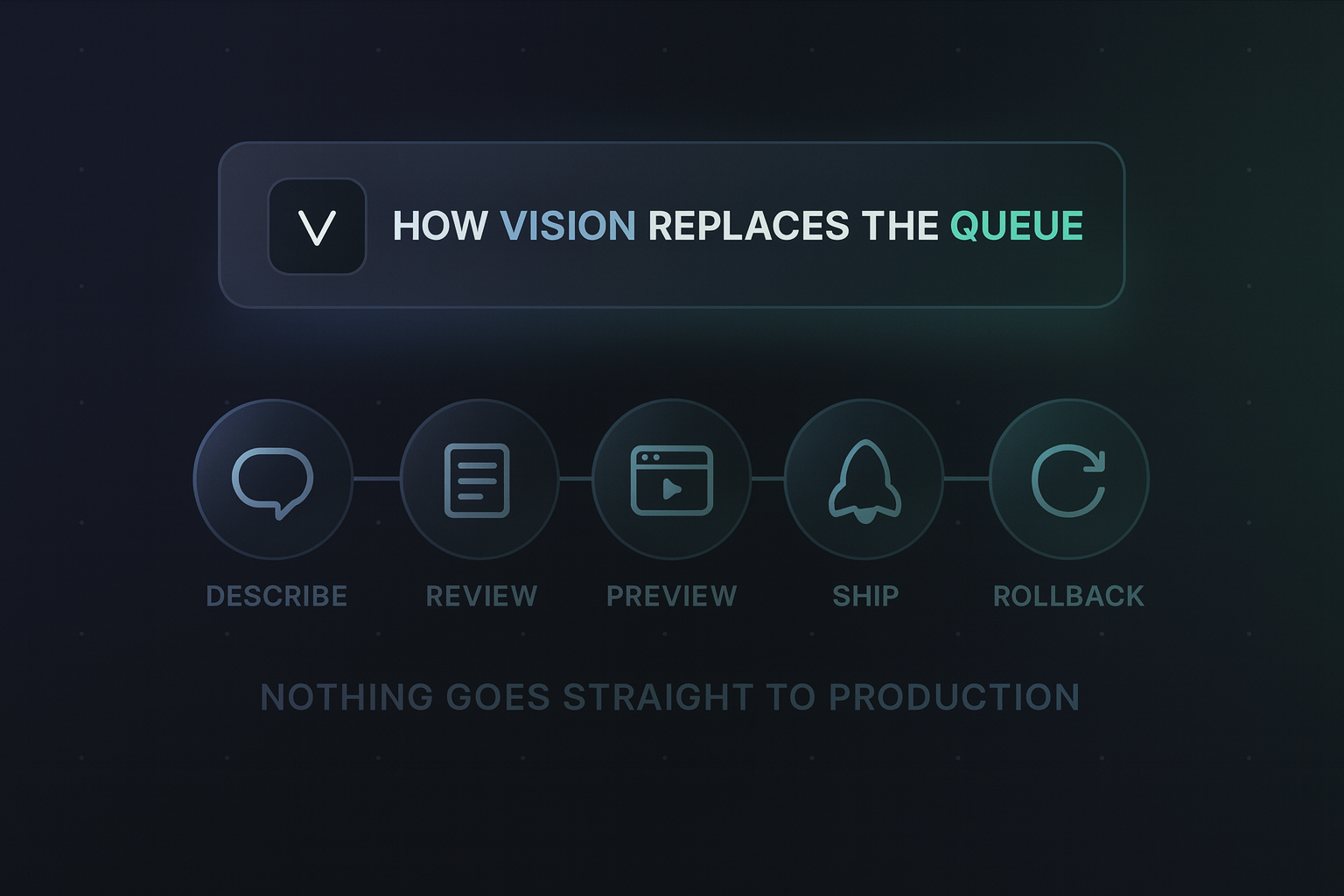
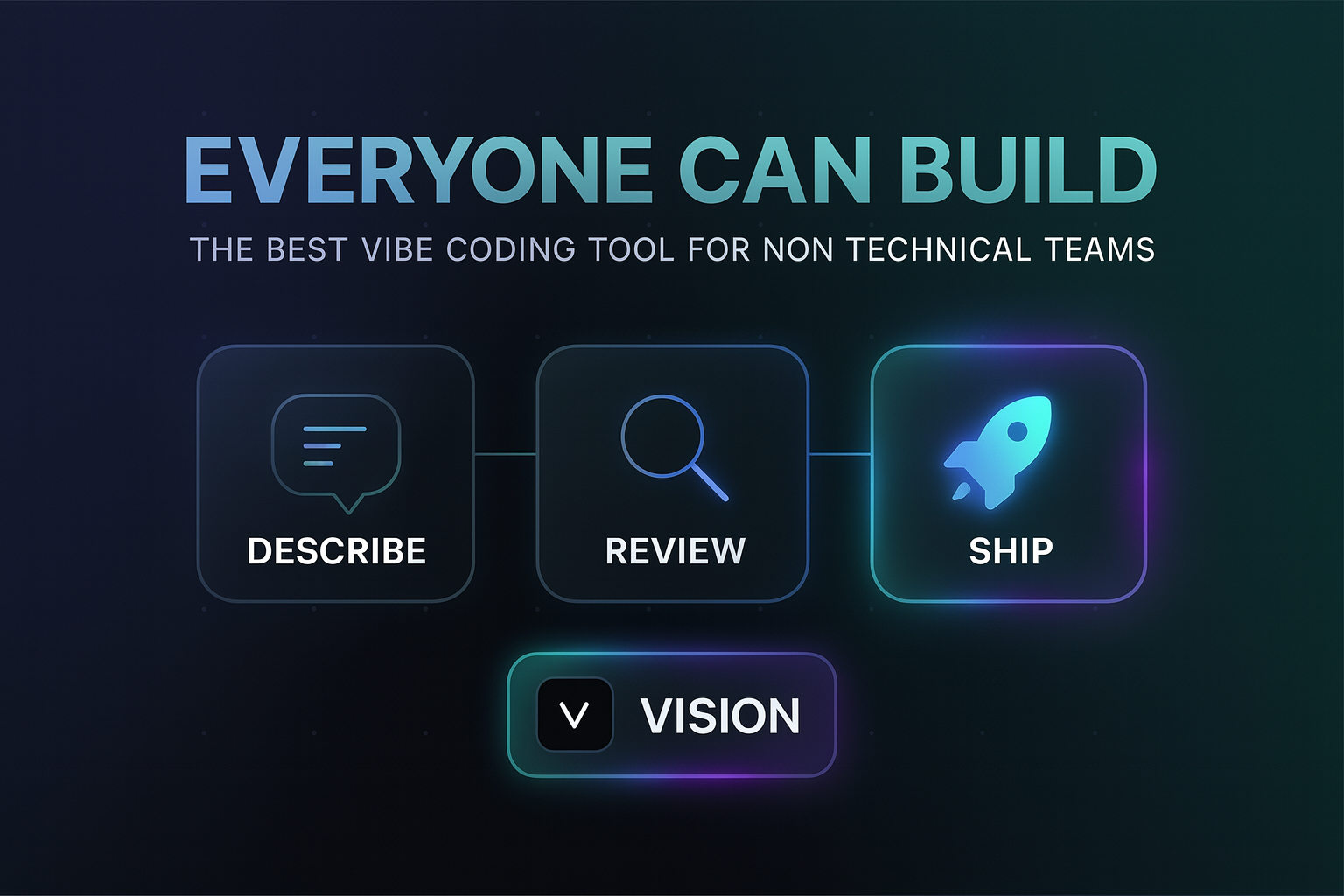
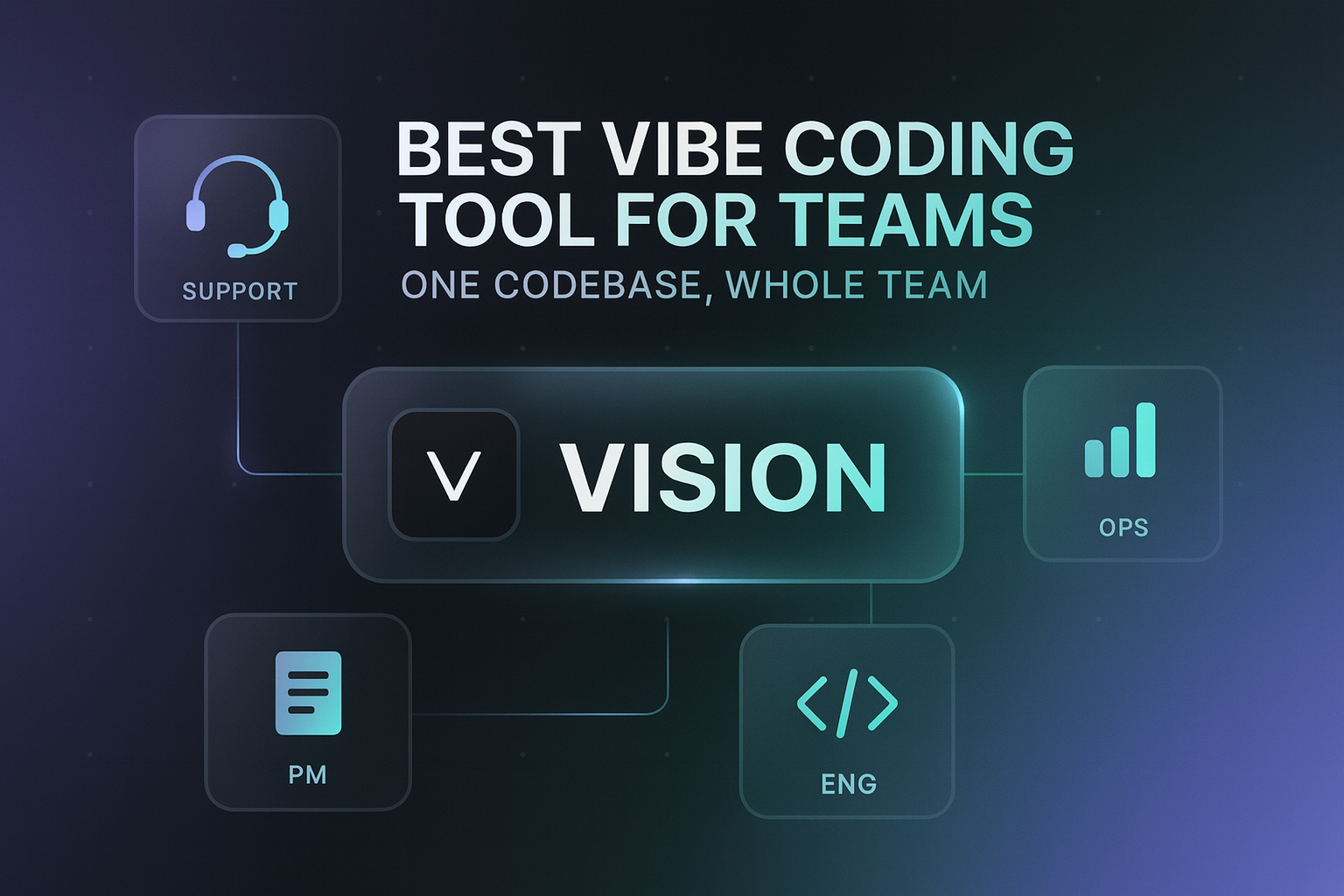
Vision lets nontechnical teammates build and evolve internal tools and websites on your real repo. You describe the change. The agent writes reviewable code, tests it, and publishes through a preview environment. Promotion to production is explicit. Rollback is one click.
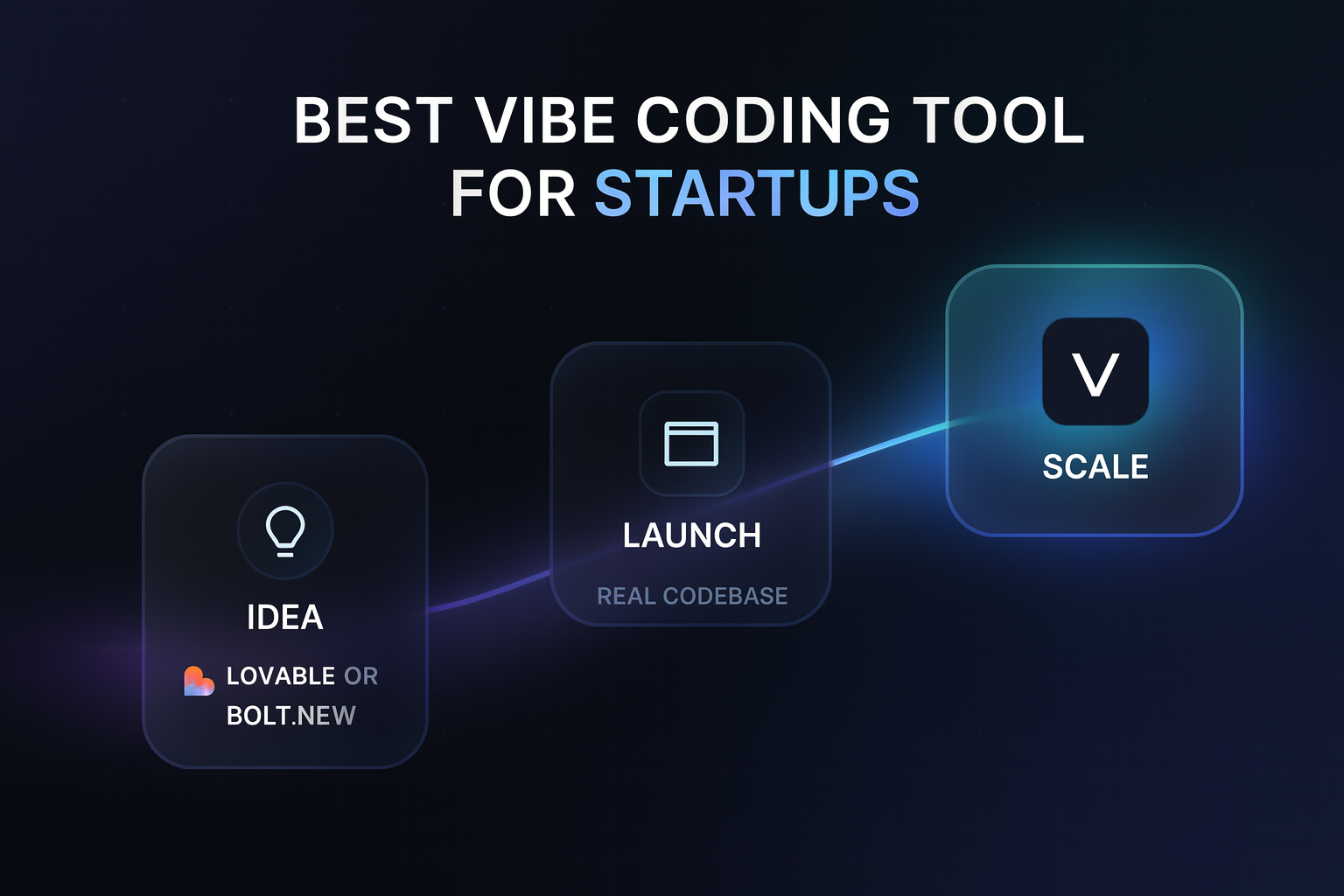
That is the gap most AI builders miss. Lovable, Bolt, and similar tools are strong for greenfield apps. They do not safely edit production software you already run.
Best for: founders, ops, and marketing who need tools and site work without hiring another agency.
Tradeoff: Vision is built around GitHub and team guardrails. A brand-new company with no repo can prototype elsewhere first, then switch.
Early Vision teams have shipped 117 production updates in a 20-day stretch, with 1,027 files changed safely. Most of the people shipping have never written code.
2. In-house engineer (best for core product)
A full-time engineer is still the right hire for product architecture, security reviews, and hard technical work.
Best for: the product customers pay for.
Tradeoff: using that person as your internal-tools agency is the expensive path. Every admin panel they build is roadmap time you do not get back.
3. Freelance or offshore developer (best for discrete projects)
A contractor can knock out a defined build if you can spec it tightly.
Best for: one-off projects with a clear brief.
Tradeoff: you still wait on someone else's calendar, and ongoing edits restart the cycle. See alternatives to hiring an offshore developer.
4. Greenfield AI app builders (best for prototypes)
Lovable, Bolt.new, and v0 are fast when you are starting from zero.
Best for: MVPs and demos with no existing codebase.
Tradeoff: they create a separate app. Auth, data, and SEO then live outside production. If you need a Lovable-class workflow on a real repo, start with Vision vs Lovable.
5. No-code / internal tool platforms (best for simple dashboards)
Retool and similar tools connect to data and assemble UIs from components.
Best for: engineering-owned internal apps with a drag-and-drop UI.
Tradeoff: someone technical still builds and maintains every screen. The backlog does not disappear.
How do dev agency alternatives compare?
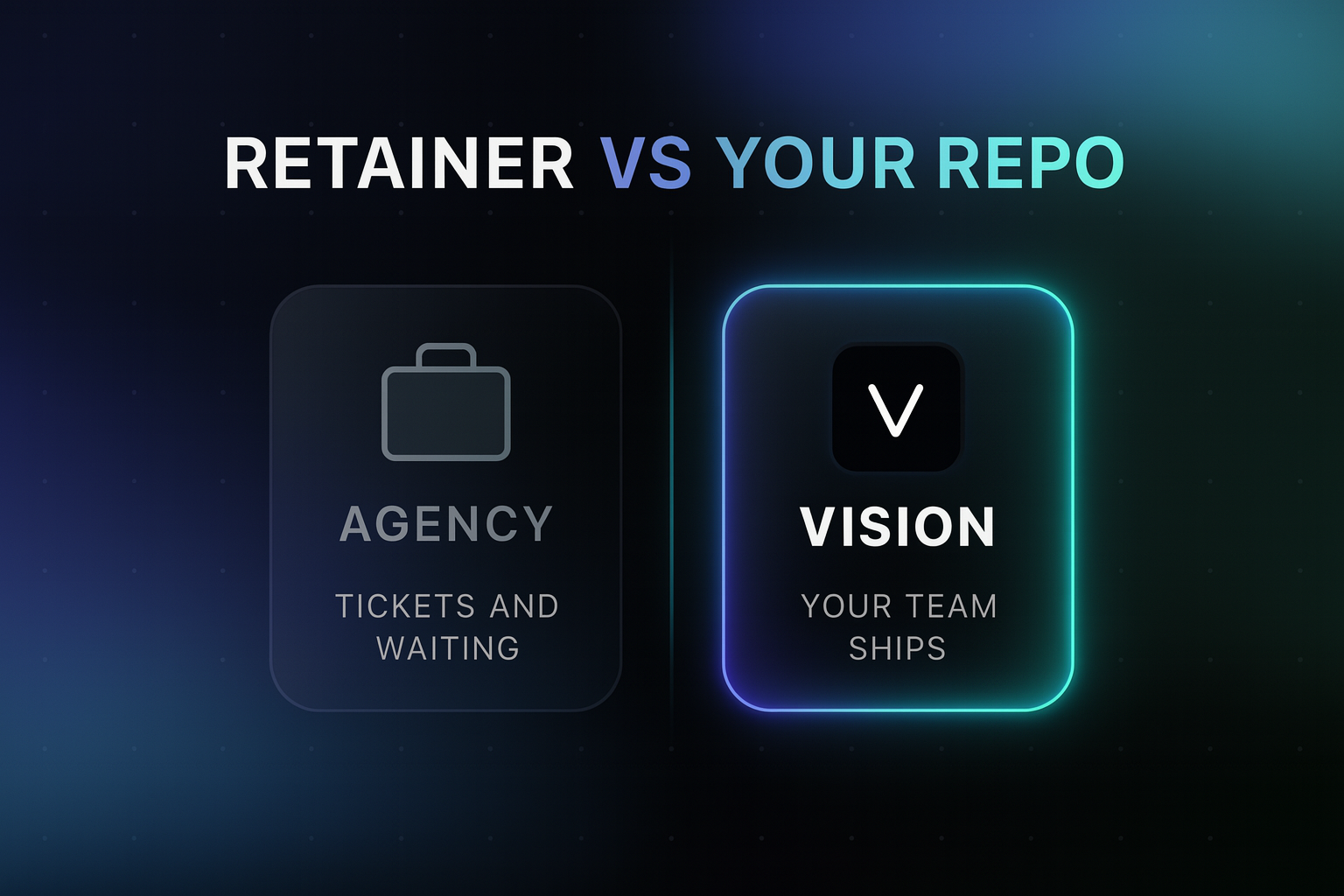 | Option | Works on existing GitHub repo | Nontechnical people can ship | Typical monthly cost | Best for |
| --- | --- | --- | --- | --- |
| Vision | Yes | Yes, with preview and rollback | About $300-500 for two daily builders | Internal tools and site work on a live product |
| Dev agency retainer | Via tickets | No | Often $10K-$20K+ | Large custom builds |
| In-house engineer | Yes | No | Salary plus benefits | Core product |
| Offshore contractor | Sometimes | No | Project fees or hourly | Discrete builds |
| Lovable / Bolt | Limited | Yes, on a new app | Lower for prototypes | Greenfield MVPs |
When should you still hire a web development agency?
Hire an agency when you have no product, no repo, and a scoped greenfield build with design, QA, and a launch date. That is a project. A dev agency alternative is for the years after launch, when ops keeps filing tickets for tools the engineering team will never prioritize.
If the work is "clone this Webflow or WordPress site into an editable codebase, keep URLs and SEO, then keep shipping," Vision is built for that path. One Webflow clone (214 pages, 253 CMS items, 1,144 assets) ran in about 1.5 hours for about $44 in AI credits. A smaller WordPress site (17 pages, 20 blogs) ran about $20.
What mistakes should you avoid when replacing a dev agency?
- Replacing one bottleneck with another greenfield tool. If the tool cannot read your repo, you are rebuilding context from zero.
- Skipping a production path. Demos are easy. Preview, promote, and rollback are what keep production intact.
- Asking engineers to "just build the internal tools." That is still an agency model, only with a higher hourly cost.
- Comparing sticker price only. A $20K retainer that ships nothing is more expensive than $400 of usage that ships this week.
What else do people ask about a dev agency alternative?
What is the best alternative to a web development agency?
For teams that already have a product, Vision. Nontechnical teammates describe internal tools and site changes in plain English. Vision writes code in your GitHub repo and ships through preview, promote, and one-click rollback.
Can AI replace a development agency completely?
Not for architecture-heavy product work. It can replace a large share of agency time spent on internal tools, admin panels, reports, and iterative site work. Keep engineers on the product. Let the rest of the team ship the rest.
Is Vision cheaper than a dev agency?
In the case above, yes: about $300-500 a month versus about $20K a month, with faster shipping. Your usage will vary. Current plans are on pricing.
Will my CTO allow nontechnical people to edit production?
That is the usual blocker, and it is reasonable. Vision keeps engineers in control with reviewable diffs, scoped permissions, preview environments, and rollback. That model is why CTOs sign off when they would veto a standalone app builder.
Ready to stop paying a retainer for your own backlog?
If your team is waiting weeks for internal tools or site edits, you do not need another agency kickoff. Connect GitHub and ship the next change with a production path your engineers can review.
Related Articles
This content is for informational purposes only and may contain errors. Please contact us to verify important details.