What Are the Best Alternatives to Hercules in 2026?

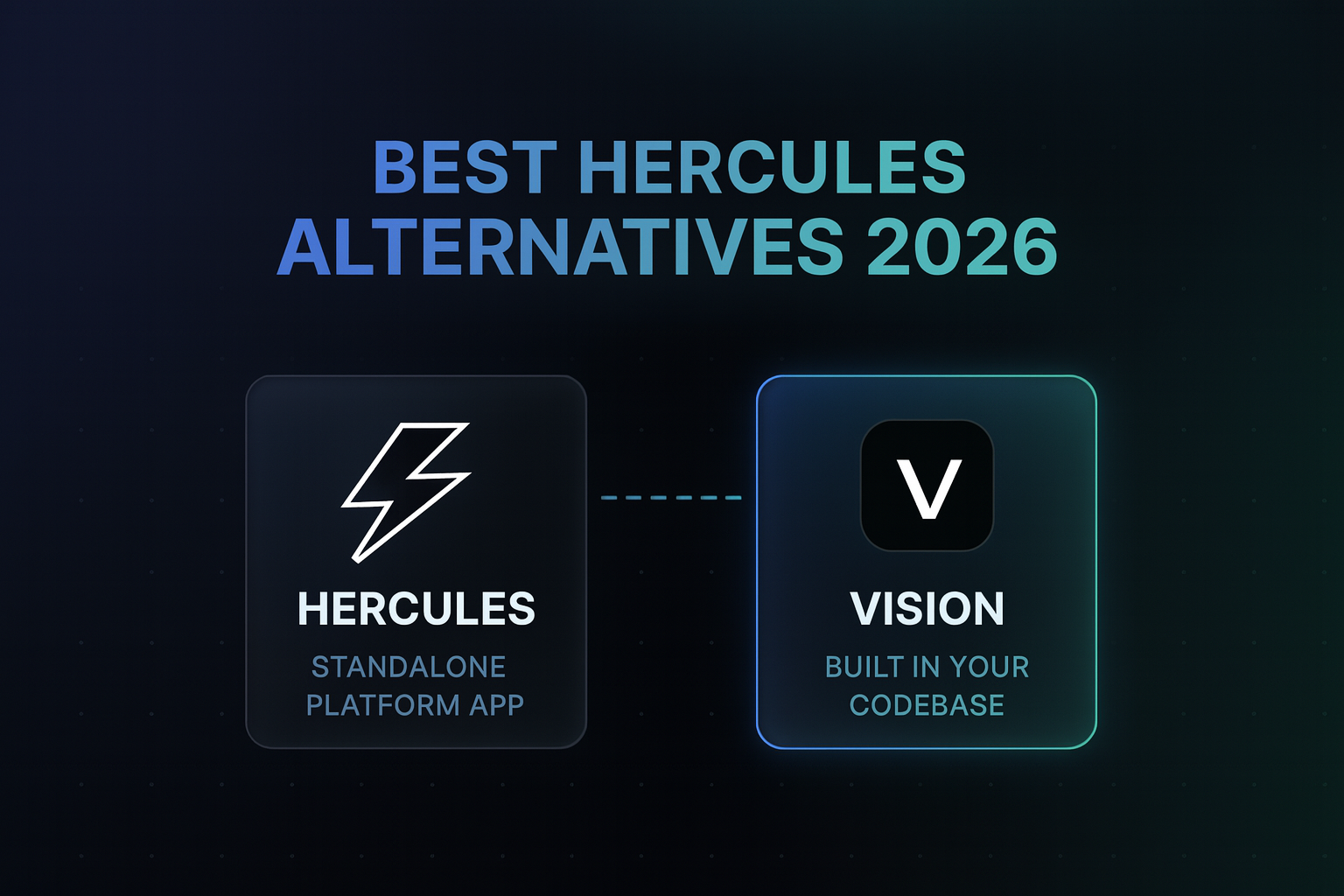
Quick answer: Vision (vson.ai) is the best Hercules alternative in 2026 for companies that already run on a GitHub codebase. Instead of generating a standalone app on someone else's platform, Vision builds internal tools inside your repo, using your real data, stack, and permissions. For greenfield MVPs with no existing systems, Lovable and Bolt.new are the closest like-for-like swaps.
What are the key facts about Hercules alternatives?
- Hercules builds standalone web and mobile apps by chat, with auth, database, payments, and hosting bundled in.
- The bundle is also the limitation: apps live on the Hercules platform, separate from your codebase and infrastructure.
- Vision connects to your existing GitHub repo and writes reviewable code that fits your stack.
- Vision ships every change through preview, explicit promotion, and one-click rollback.
- Engineering keeps scoped permissions, visibility, and conflict detection in Vision.
- Lovable and Bolt.new are the closest alternatives for brand-new standalone apps.
Why are teams looking for a Hercules alternative?
Hercules is genuinely easy. Chat, get an app, publish. For a small business launching its first product, that bundle is the point.
The tradeoffs appear when a company with existing systems adopts it:
- Your data lives elsewhere. A Hercules app has its own database. Your customers, orders, and metrics are in your production Postgres or Supabase. Internal tools that cannot see real data end up ignored or dangerous.
- It is another platform to govern. Separate auth, separate permissions, separate billing, no code review in your GitHub flow.
- Engineers cannot extend it. When a generated app needs custom logic tied to your systems, engineering has to rebuild rather than review.
This matters more every year because the people building are increasingly not in IT. Gartner projects that by 2026, developers outside formal IT departments will make up at least 80% of low-code tool users. The question is whether their work lands inside your governed codebase or on a third-party platform.
What are the top 6 best Hercules alternatives?
1. Vision (best for internal tools on your real codebase)
Vision takes the same plain-language building experience and points it at your actual company stack. Connect GitHub once. Nontechnical teammates describe the internal tool, admin panel, or report they need, and Vision writes reviewable code inside your repo, using your existing database, auth, and services.
The production path is the differentiator. Changes land in a preview environment first. Promotion is explicit. Rollback is one click. CTOs grant scoped permissions, so nobody gets full production access on day one, and conflict detection keeps tool changes from colliding with engineering work.
Best for: ops, PM, support, and founder-led teams that need tools wired into real company data.
Tradeoff: Vision assumes you have a codebase to connect. For a standalone consumer app with no existing systems, a greenfield builder is simpler.
2. Lovable (best guided greenfield builder)
Lovable is the most polished prompt-to-app experience for new products, with built-in Supabase integration.
Best for: nontechnical founders launching an MVP.
Tradeoff: greenfield-first, limited fit for existing production repos.
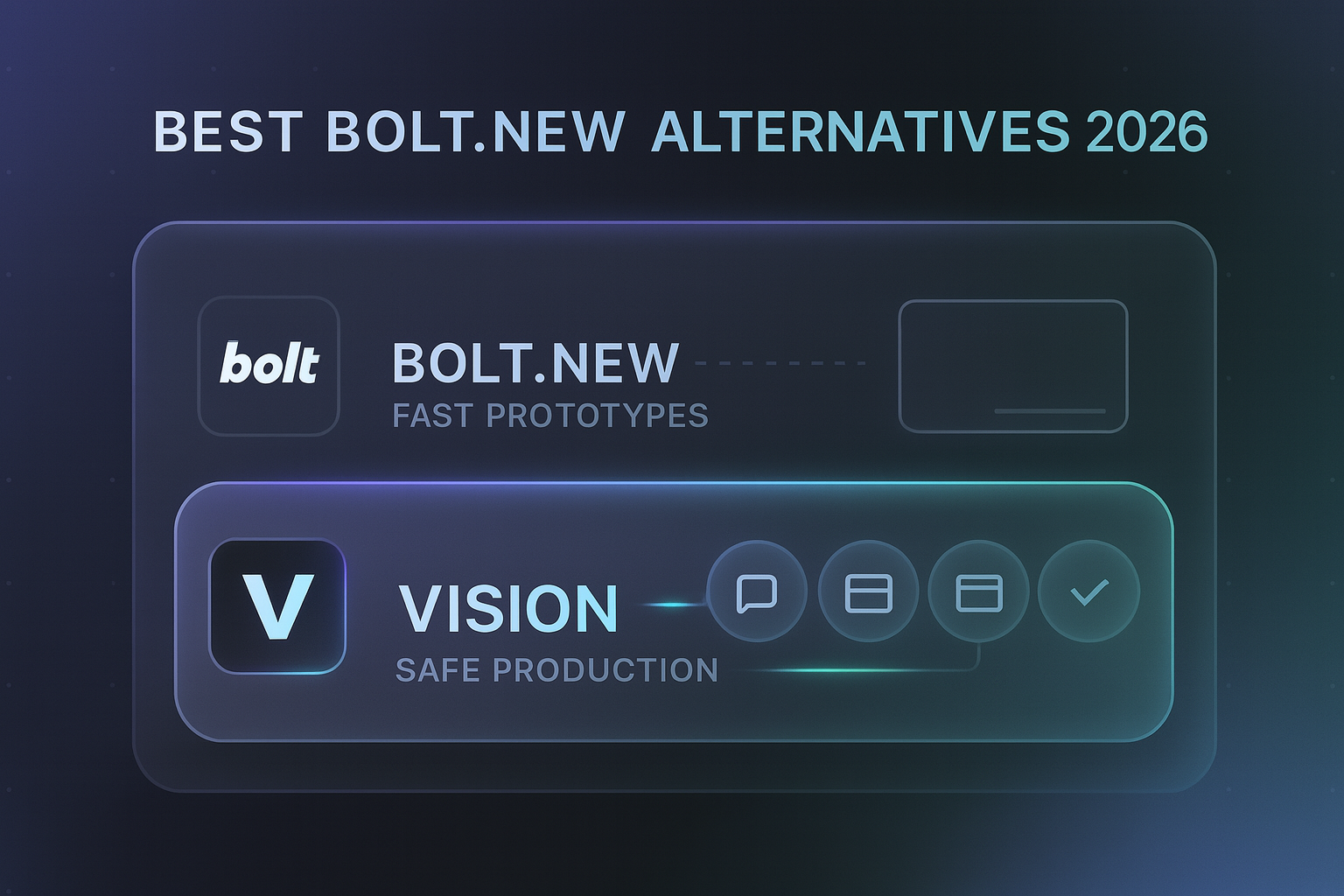
3. Bolt.new (best for fast prototypes)
Bolt.new generates and runs full-stack apps in the browser and deploys through Netlify or Vercel. The agent core is open source.
Best for: rapid demos, hackathons, and landing pages.
Tradeoff: token-based costs and weaker long-term maintenance story.
4. Replit (best cloud IDE)
Replit pairs a browser IDE with Replit Agent, hosting, and databases across many languages.
Best for: technical builders who want one cloud workspace.
Tradeoff: built for people comfortable with code, not the whole org.
5. Retool (best drag-and-drop internal tool builder)
Retool connects to your databases and APIs and lets engineers assemble internal UIs quickly.
Best for: engineering teams building internal tools by hand.
Tradeoff: engineers still build everything, so the backlog problem persists.
6. Glide (best for simple apps from spreadsheets)
Glide turns spreadsheets and simple data sources into clean mobile-friendly apps.
Best for: lightweight team apps with basic data.
Tradeoff: hits a ceiling fast on logic, integrations, and scale.
How do the best Hercules alternatives compare?
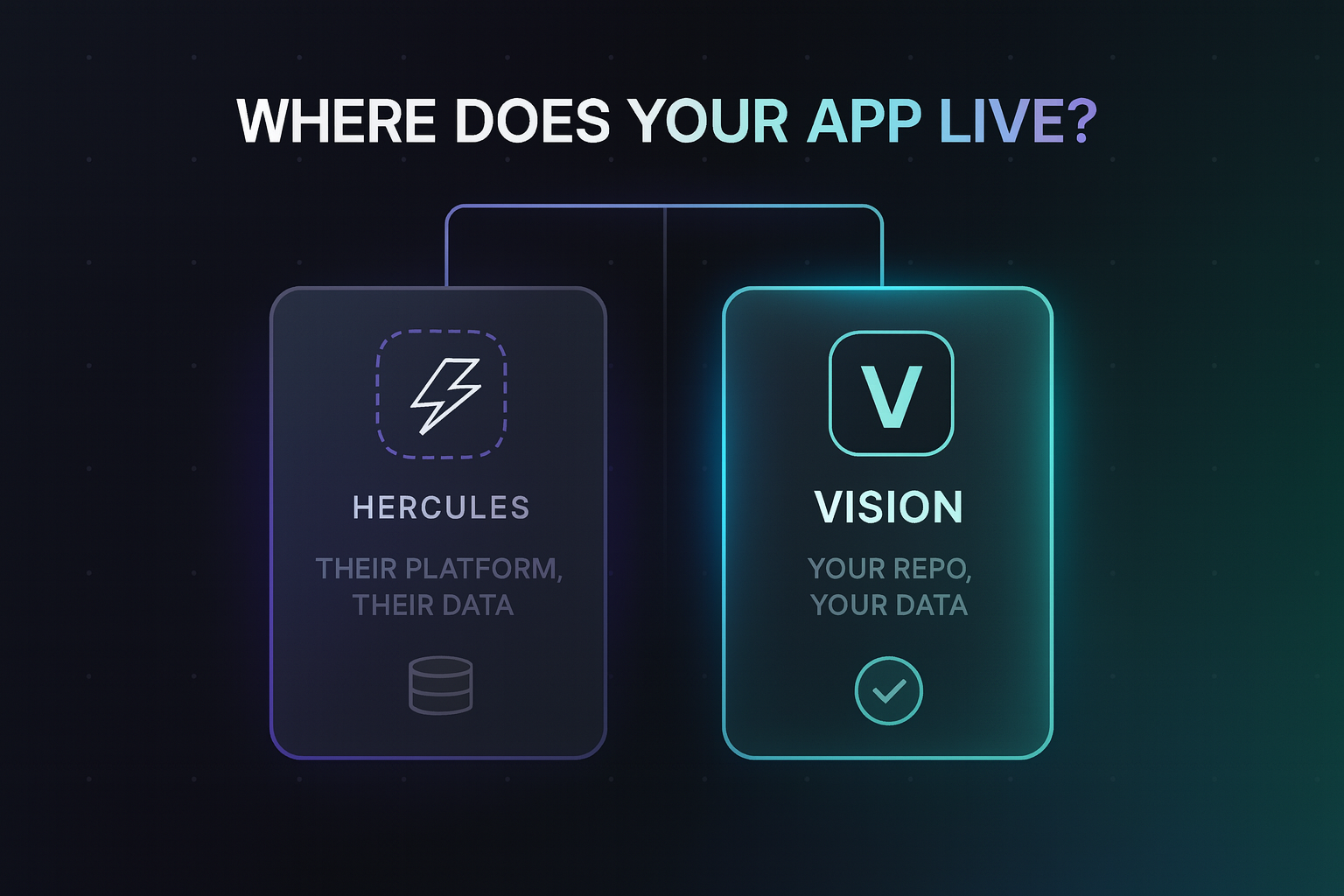
| Tool | Where the app lives | Uses your existing data and code | Nontechnical friendly | Safe production path |
|---|---|---|---|---|
| Vision | Your GitHub repo | Yes | Yes | Preview, promote, rollback |
| Hercules | Hercules platform | No | Yes | Platform-managed |
| Lovable | Lovable project | Limited | Yes | Basic |
| Bolt.new | Browser project + deploy | Limited | Partly | Manual |
| Replit | Replit workspace | Import | No | Manual |
| Retool | Retool platform | Data yes, code no | No | App-level |
Should you build a standalone app or on your codebase?
The core decision is not which builder has the best chat. It is where the output should live.
- Standalone (Hercules, Lovable, Bolt.new): fastest path to a new app, isolated from your systems. Right for new products.
- Codebase-connected (Vision): the tool becomes part of your production system, with your data, your auth, your review process. Right for internal tools, admin panels, and anything touching customer data.
If your CTO would veto an app that bypasses code review and holds a copy of customer data, you need the codebase-connected option.
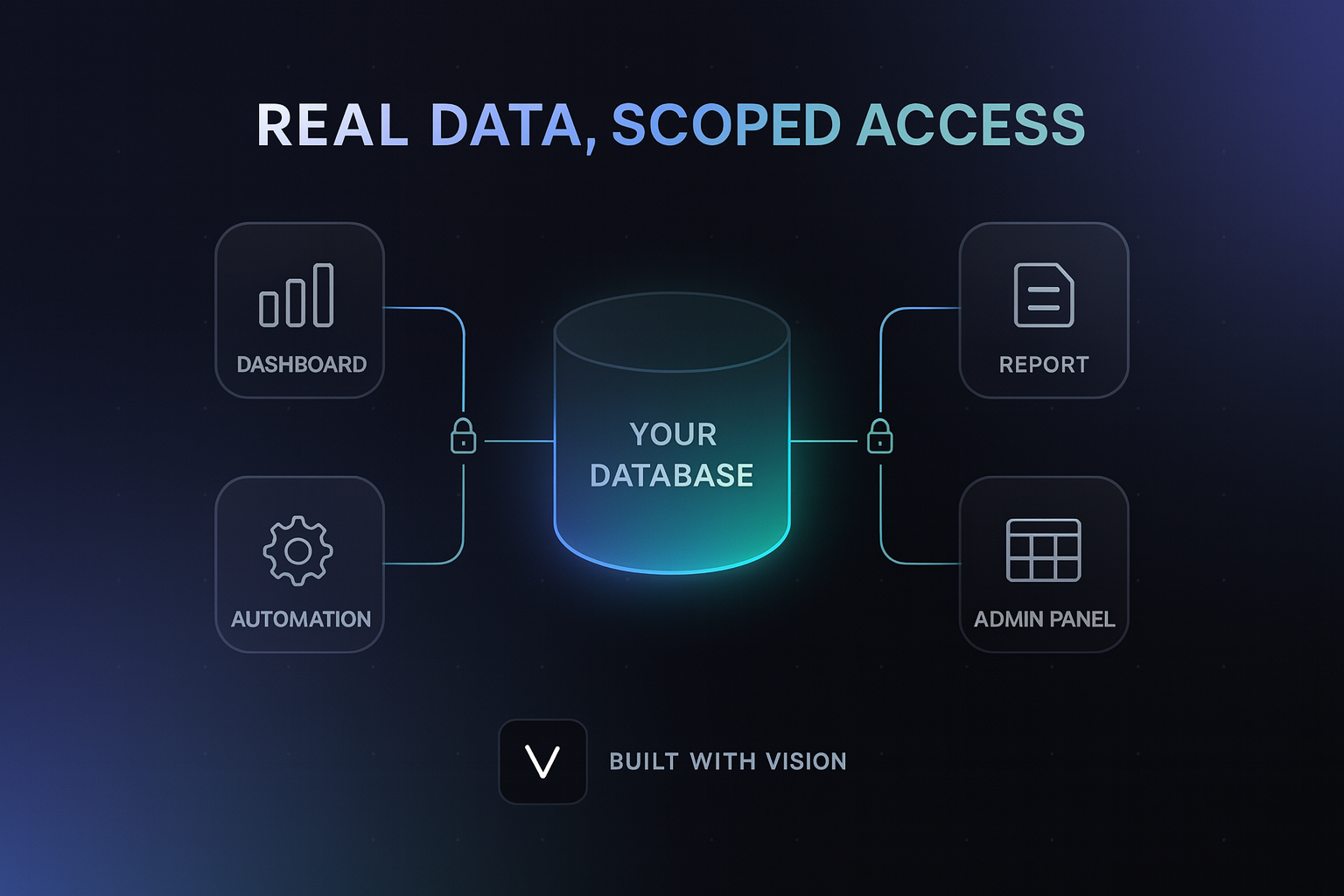
What can an ops team actually build with Vision?
Two operators at an events company (zero dev experience between them) built an internal event-management dashboard with a P&L page and a stakeholder tracker, starting from a spreadsheet and a verbal description. By the time both tools were working, they had spent $21 in usage. That is the codebase-connected model in practice: real internal tools on real data, built by the people who need them, without a platform migration or an agency invoice. More examples are on the Vision use cases page.
Vision's founder frames the underlying insight simply: nontechnical people were never less capable, they were locked out. And they are usually closer to the problem than anyone on the engineering team, which is exactly why the ops team's dashboard matched what ops actually needed.
What mistakes should you avoid when replacing Hercules?
- Building internal tools on someone else's platform. Data copies and separate auth create security review headaches later.
- Confusing publishing with production-readiness. One-click publish is not the same as preview, approval, and rollback.
- Not planning for handoff. Eventually engineering will need to extend the tool. Reviewable code in your repo makes that possible.
What else do people ask about Hercules alternatives?
What is the best Hercules alternative for internal tools?
Vision. Instead of generating a standalone app on a separate platform, Vision writes reviewable code in your existing GitHub repo, so internal tools use your real data and ship through preview, promotion, and one-click rollback.
Is Hercules good for nontechnical users?
Yes, Hercules is one of the easiest AI app builders for nontechnical users building standalone apps. The limitation is integration: it does not build inside your existing production codebase, which is what internal tools usually require.
Can Vision build customer-facing apps too?
Vision focuses on internal tools, admin panels, docs, and reports built on your codebase. Teams often pair it with their engineers' normal workflow for customer-facing product work, all in the same repo.
How much does Vision cost compared to Hercules?
Vision is $50 per seat plus usage. Real usage can be surprisingly small: one two-person ops team built two working internal tools for $21 in usage. See the pricing page for current plans.
Can Vision use my production database safely?
Yes. Vision builds against your existing database through your codebase, with scoped permissions per teammate, preview environments before production, and one-click rollback if anything is wrong.
Ready to build on your real stack?
If you need tools that work with your actual production data, skip the standalone app platform. Connect your GitHub to Vision, describe the tool, and ship it safely.
Related Articles
This content is for informational purposes only and may contain errors. Please contact us to verify important details.