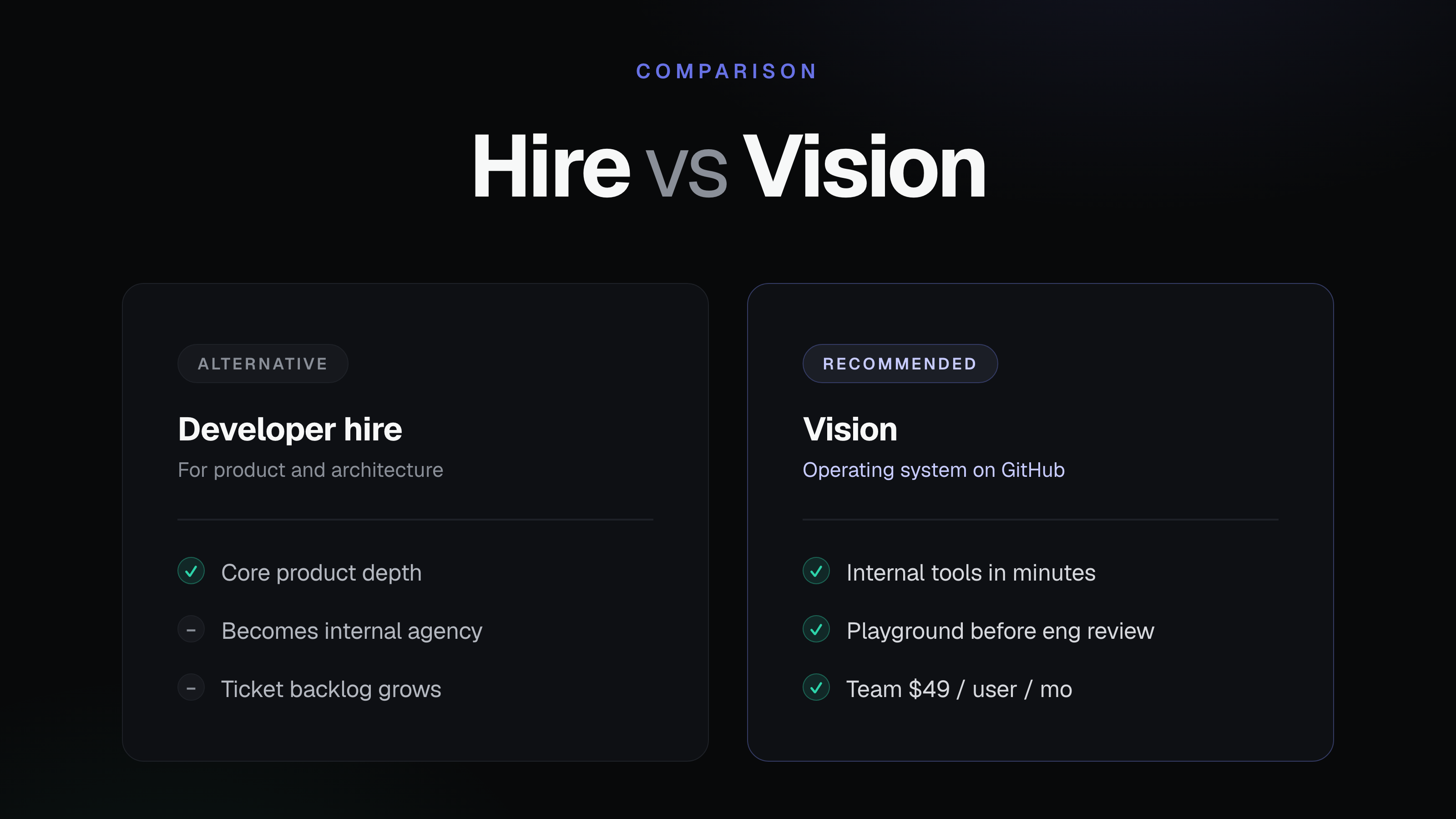
The short answer: it depends on what you want at the end. If you need slide decks, one-pagers, and marketing visuals, Claude Design is genuinely good at those and you should probably keep it. But if you prototype internal tools and product pages because you want to ship them, the best Claude Design alternative is Vision, an AI app-building platform that starts the same way (describe what you want, get an interactive prototype) and ends somewhere Claude Design cannot go: working software in your real codebase, at $49 per user per month flat, with no usage meter.
Most people searching for a Claude Design alternative are not unhappy with the design quality. They are running into the usage meter, the hand-off wall, or the gap between a beautiful artifact and a tool their team can actually use. The right way to pick a replacement is to be honest about which of those walls you hit.
Why people look for a Claude Design alternative

Claude Design earned its buzz fast. Anthropic launched it in April 2026 as a research preview, and the pitch lands: describe what you want in a chat and it generates interactive prototypes, wireframes, one-pagers, decks, and marketing visuals, powered by Claude Opus 4.7. It can even import a design system from your GitHub repo so output stays on brand.
The complaints that send people searching are consistent, and they are mostly not about output quality:
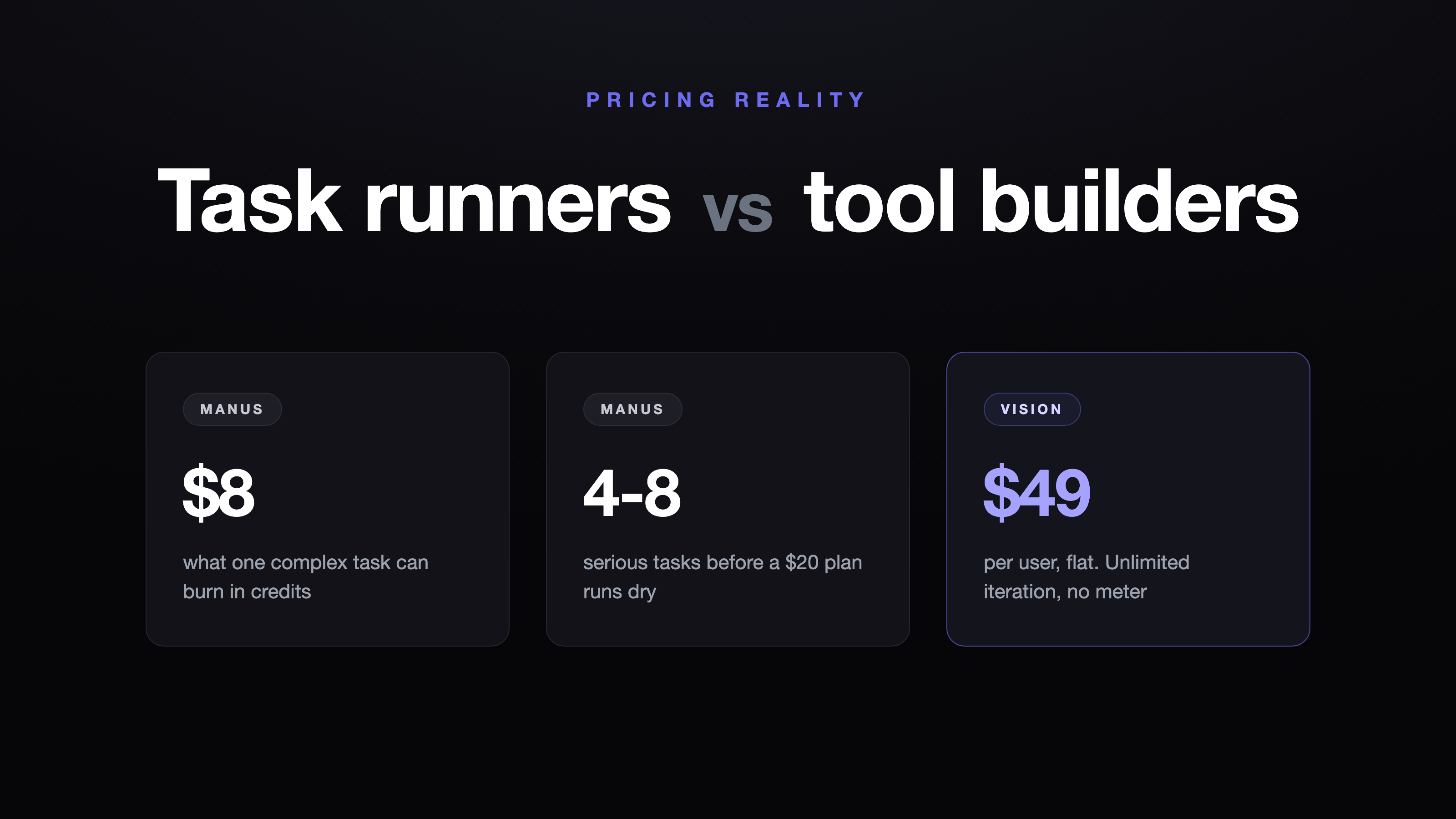
- The usage meter is complaint number one. Claude Design has no standalone price: it is included with Claude Pro at $20/month, and it drains the same weekly allowance as chat, Claude Code, and Cowork. It runs on Opus, so iterating is expensive. One Hacker News user burned 95% of a week's allowance in a single back-and-forth design session, and reviewers consistently find that 2-3 serious projects saturate a week on the $20 plan. Real use pushes you toward the $100-200/month Max tiers.
- A prototype is where it ends. The output is a design artifact. To become working software, it has to be handed off to Claude Code (a developer tool) via /design-sync and rebuilt or continued there. If your team has developers living in Claude Code, that round-trip works. If it does not, the hand-off is the wall.
- Design-system fidelity drifts. Users report generated components that do not match the design system it just imported. "It can't replicate components in design system. In some cases, it's not even close," as one r/UXDesign thread put it.
- Export gaps and beta bugs. No Figma export, no PNG export, and documented issues in the beta: disappearing comments, save errors, repo-linking lag, and no audit logs.
None of this makes Claude Design a bad product. It is a beta with a metered engine and a specific job: producing design artifacts. The question is whether that is the job you are hiring it for.
The real question: do you want a picture of the tool, or the tool?
Claude Design answers "what could this look like?" That is a real question, and for decks and marketing visuals it is the whole question.
But most business users prototyping an internal dashboard, an approval flow, or a customer portal are not doing it to admire the prototype. The prototype is step one of "I need this thing to exist." And that is where the two products split: with Claude Design, the interactive prototype is the finish line. With Vision, it is the starting line.
Vision: the alternative when the goal is working software
Vision starts with the same motion you liked in Claude Design, then keeps going where it stops.
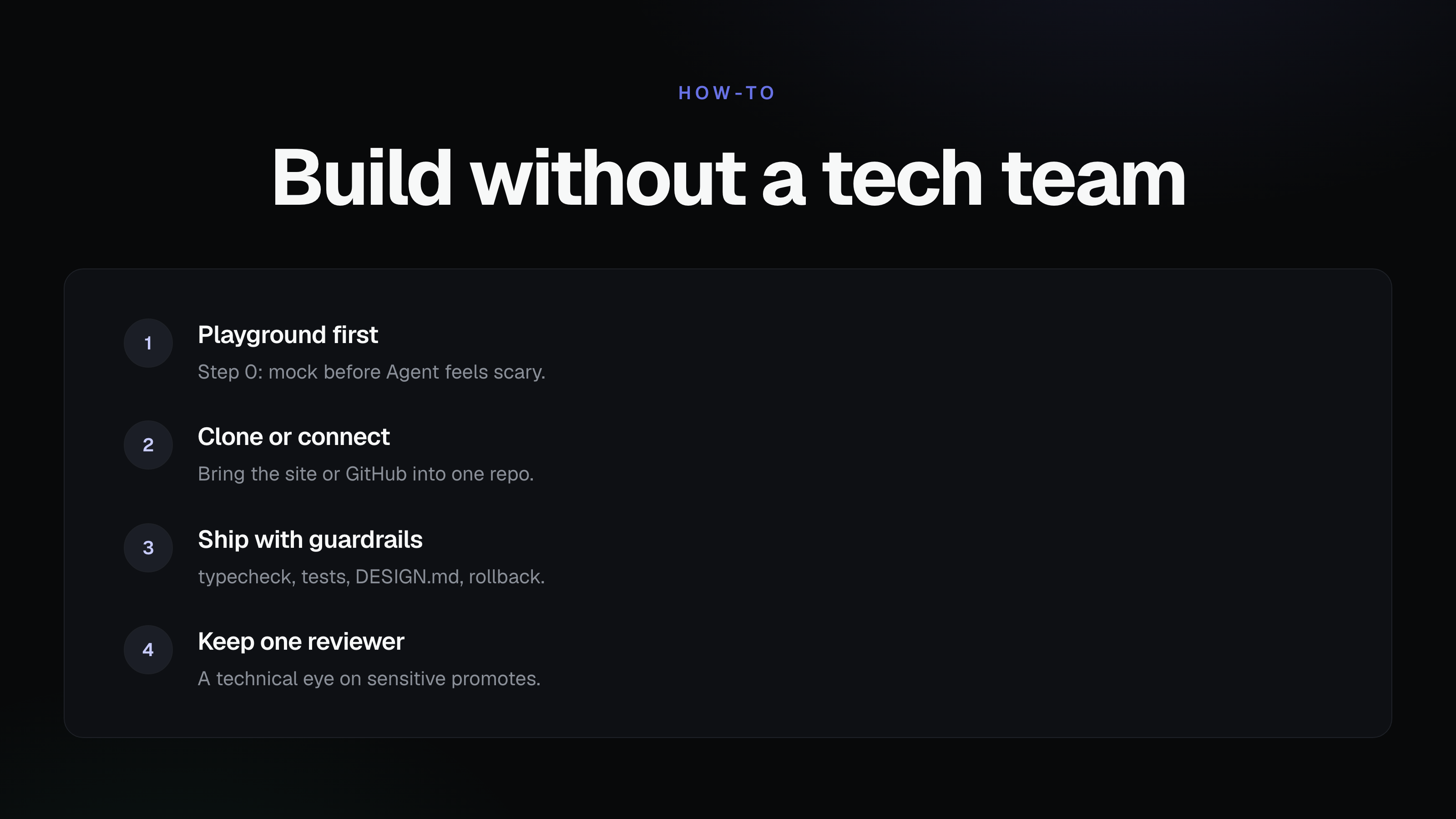
- Design mode gives you the same describe-to-prototype start. Tell Vision what you need and it builds a clickable, interactive prototype: every button, tab, and form works, multi-step flows advance, and screens are filled with simulated data. It is not a static mock, and anything that cannot genuinely run in a prototype is labeled instead of faked.
- One-click Build ships the prototype into your real codebase. Vision connects to existing codebases, not just greenfield projects. The hand-off that requires a developer driving Claude Code simply is not there: approving the prototype is the hand-off.
- Design fidelity is enforced, not hoped for. During a build, the agent checks your app's existing global styles for conflicts that would silently restyle new pages, runs a screen-by-screen comparison against the prototype you approved, and opens its reply with a verdict. If it could not visually verify the result, it says so in the first line. Any deliberate deviation ships as a listed "Deviations from the prototype," so you decide what is acceptable, not the AI. This is the direct answer to the fidelity drift Claude Design users report.
- Every build ends with a "How to test this" walkthrough. A numbered test script you can follow blind, including steps that start outside the app, like "open the invite email." Nontechnical users can verify their own builds without a developer translating.
- There is a safe path to production. Preview and publish are separate steps, a Revert control undoes a bad change, environment secrets are managed per dev and prod, and teams build together in shared workspaces.
- Your tools read real business data. Vision connects to tools like Gmail, Google Calendar, Google Analytics, and Calendly, so the internal tools you build work with the data your business already runs on.
Where Claude Design is still the right choice
Fair is fair, and there are three cases where you should not switch:
- You need decks, one-pagers, or marketing visuals. Claude Design is genuinely good at those, and Vision does not do them at all.
- You already pay for Claude and your developers live in Claude Code. The /design-sync round-trip from prototype to code is a real workflow when there is a developer driving the second half.
- You want brand assets, not product surfaces. Vision's lane is internal tools and product pages on real codebases. It is not a graphic design tool.
The cost math
Claude Design starts at $20/month inside Claude Pro, but that number is misleading in practice: usage shares one weekly pool with everything else Claude does, iteration burns it fast, and the documented fix is upgrading to Max at $100-200/month. You are renting capacity by the week.
Vision Team is $49 per user per month, flat. Iterating on a prototype does not burn an allowance, and a failed build attempt never bills you. If your team designs and ships tools weekly, the difference compounds: no meter anxiety while you iterate, and what you end up owning is working software instead of a folder of artifacts.
So, should you switch?
If your Claude Design usage is decks, visuals, and early ideation inside an Anthropic-equipped team, stay. It is good at its job and getting better.
But if you keep hitting the weekly meter, or your prototypes pile up waiting for a developer to make them real, you are paying for a design tool when what you wanted was software. That is the job Vision was built for: same conversational start, interactive prototype you can click through, then one click from approved design to working tool in your real codebase.
FAQ
Is Claude Design free?
No. It is included with paid Claude plans only: Pro at $20/month is the minimum, with Team at $25/user/month and Max at $100-200/month above it. There is no free tier, and usage counts against the same weekly allowance as Claude chat, Claude Code, and Cowork.
Can Claude Design build working apps?
No. It produces interactive prototypes and design artifacts. Turning them into working software requires handing off to Claude Code, a developer tool, where the build is continued or rebuilt. Without a developer in that loop, the prototype stays a prototype.
Does Vision do slide decks or marketing visuals?
No. Vision builds internal tools and product surfaces on real codebases: dashboards, portals, approval flows, admin panels. For decks and brand visuals, Claude Design or a dedicated deck tool is the better pick.
Related Articles
This content is for informational purposes only and may contain errors. Please contact us to verify important details.