What Is the Best Manus AI Alternative in 2026?

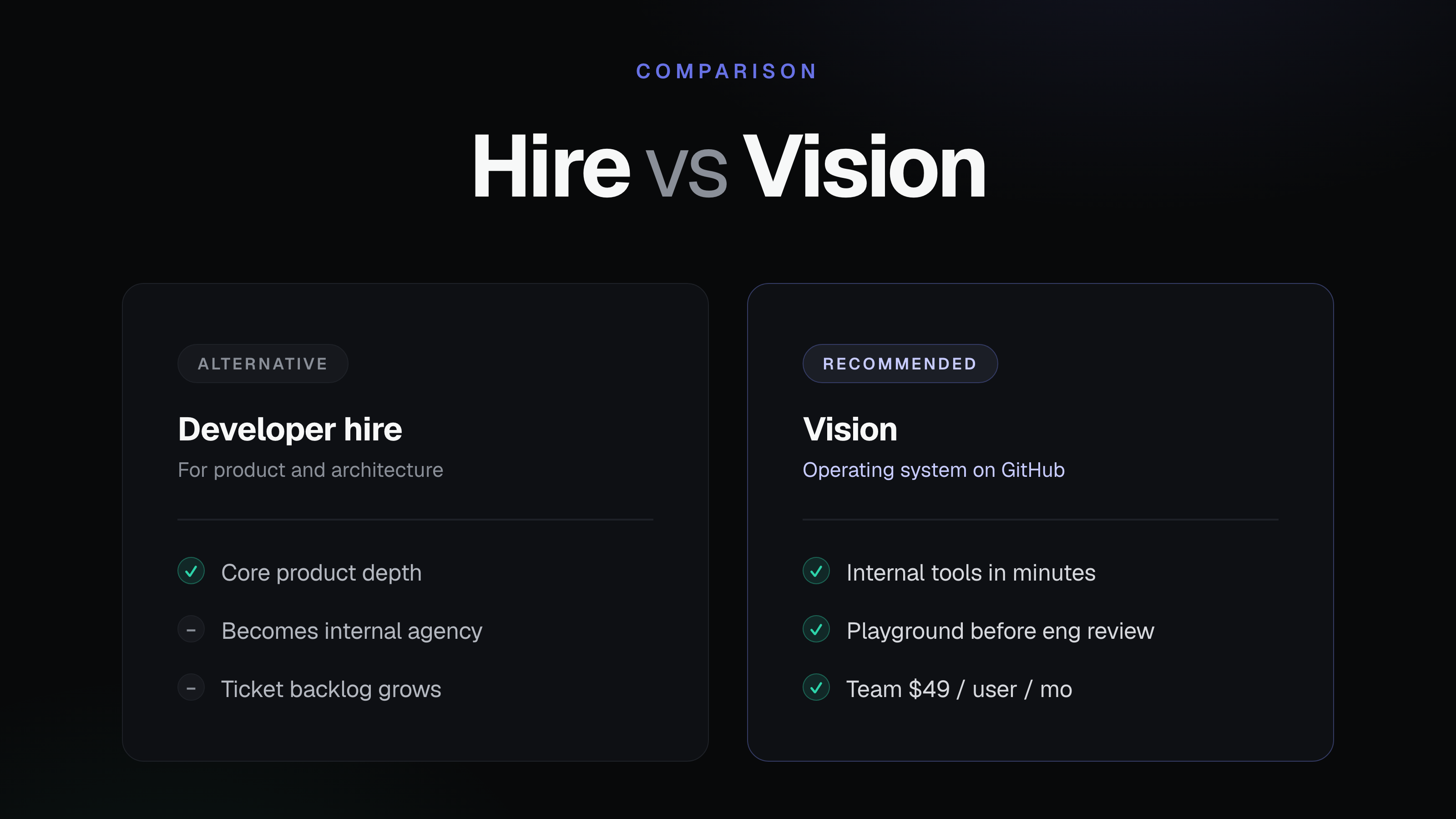
The short answer: it depends on what you use Manus for. If you run one-off research reports and slide decks, a general-purpose agent like ChatGPT's agent mode will cover you for a fraction of the cost. But if you use Manus to build tools and apps your team actually keeps using, the best Manus AI alternative is Vision, an AI app-building platform that gives you a living, editable product connected to a real codebase instead of a one-shot artifact, at $49 per user per month flat, with no credits to burn.
Most people searching for Manus AI alternatives are not leaving because the technology is unimpressive. They are leaving because of unpredictable credit burn, paying for failed runs, and billing frustration. So the right way to pick a replacement is to be honest about what job you were hiring Manus to do, and then pick the tool built for that job.
Manus AI alternatives at a glance
| Manus AI | Vision | ChatGPT agent mode | Genspark | |
|---|---|---|---|---|
| Best for | Autonomous one-off tasks | Internal tools and apps your team keeps | Research, browsing, decks | Agentic research and slides |
| Output | Artifact (report, deck, prototype) | Living software with a real codebase | Chat-based deliverables | Artifacts |
| Pricing model | Credits ($20-$200+/mo) | Flat $49/user/mo | Included in ChatGPT plans | Credits |
| Failed runs cost you | Yes, credits are consumed either way | No, iterate as much as you want | No per-task metering | Yes |
| Ongoing iteration | New task = new credits | Unlimited, it's your product | Re-prompt per session | New task = new credits |
Why people look for a Manus AI alternative
Manus deserves credit for what it is: a genuinely impressive general-purpose AI agent. Give it a task, and it autonomously researches, browses, scrapes, and assembles a deliverable in a cloud sandbox. The frontier demos are real.
The frustration is almost never capability. It is the meter.
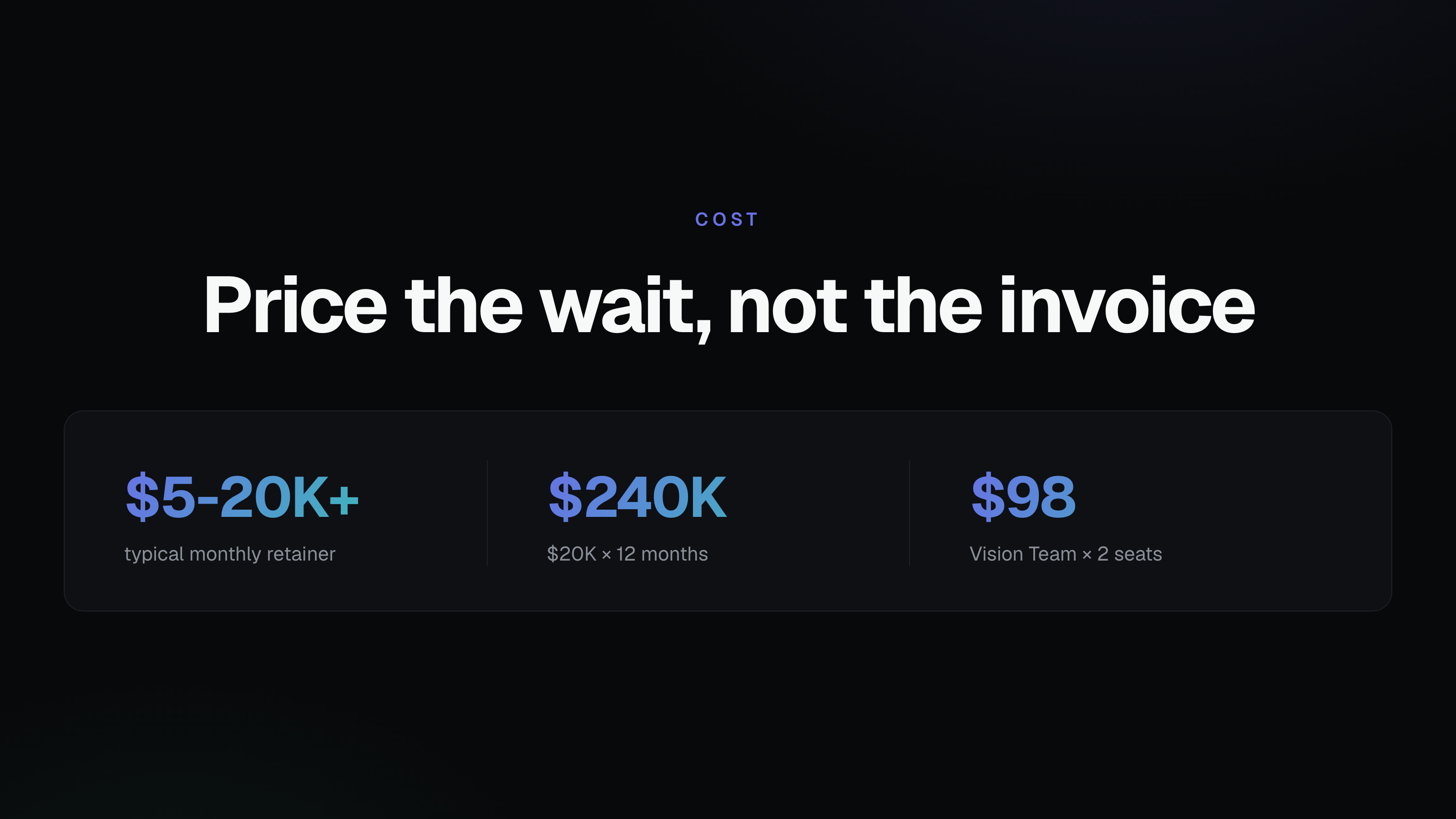
Manus AI pricing is credit-based and hard to predict. The Standard plan is $20/month for 4,000 credits, Customizable starts at $40/month for 8,000, and Extended starts at $200/month for 40,000 credits (annual billing saves 17%). Unused monthly credits do not roll over. By Manus's own documentation, building a web app costs roughly 500 to 1,000+ credits and a deep research task runs 500 to 900. Do the math: the $20 plan buys you roughly 4 to 8 serious tasks a month. One complex task can consume around $8 worth of credits on its own.
You pay whether it works or not. Manus AI credits are consumed by the attempt, not the outcome. The most consistent complaint from users is watching credits vanish on stalled or looping runs, with no real-time spend meter to catch it happening.
The trust signals are rough. As of mid-2026 Manus sits at 2.2/5 on G2 and around 1.2 on Trustpilot, with reviews skewing heavily toward billing and refund disputes. Read them yourself before committing to an annual plan.
You get an artifact, not software. A Manus run hands you a deliverable and ends. There is no ongoing codebase, no environment where your team keeps improving the thing, and its website builder has limited export options, which users describe as lock-in. If the output was a tool you wanted to keep using, you are stuck re-running (and re-paying) to change it.
Which Manus AI alternative is right for your use case?
For one-off research, browsing, and decks: a general agent is the fair answer. If your Manus usage is "research this market and give me a report," ChatGPT's agent mode or Genspark will do that job well. ChatGPT has the advantage of being bundled into a subscription you may already pay for. Genspark is closer to Manus in spirit (autonomous, artifact-producing) and shares the same credit-model caveat, so check the meter math before switching.
For building tools and apps your team keeps: Vision. This is the segment most business users are actually in, and it is where the artifact model breaks down. You did not want a report about your inventory process, you wanted an inventory tool. That is not a task-runner job, it is an app-building job, and it needs a different category of product.
Manus runs a task. Vision builds you a living tool.
Vision is an AI app-building platform: describe what you need in plain language, and it builds working software your team can use, change, and build on. The difference from Manus is structural, not incremental:
- A real codebase, not a sealed artifact. Everything Vision builds lives in an actual codebase you own. When requirements change next month, you change the tool. No re-running a task from scratch, no export lock-in.
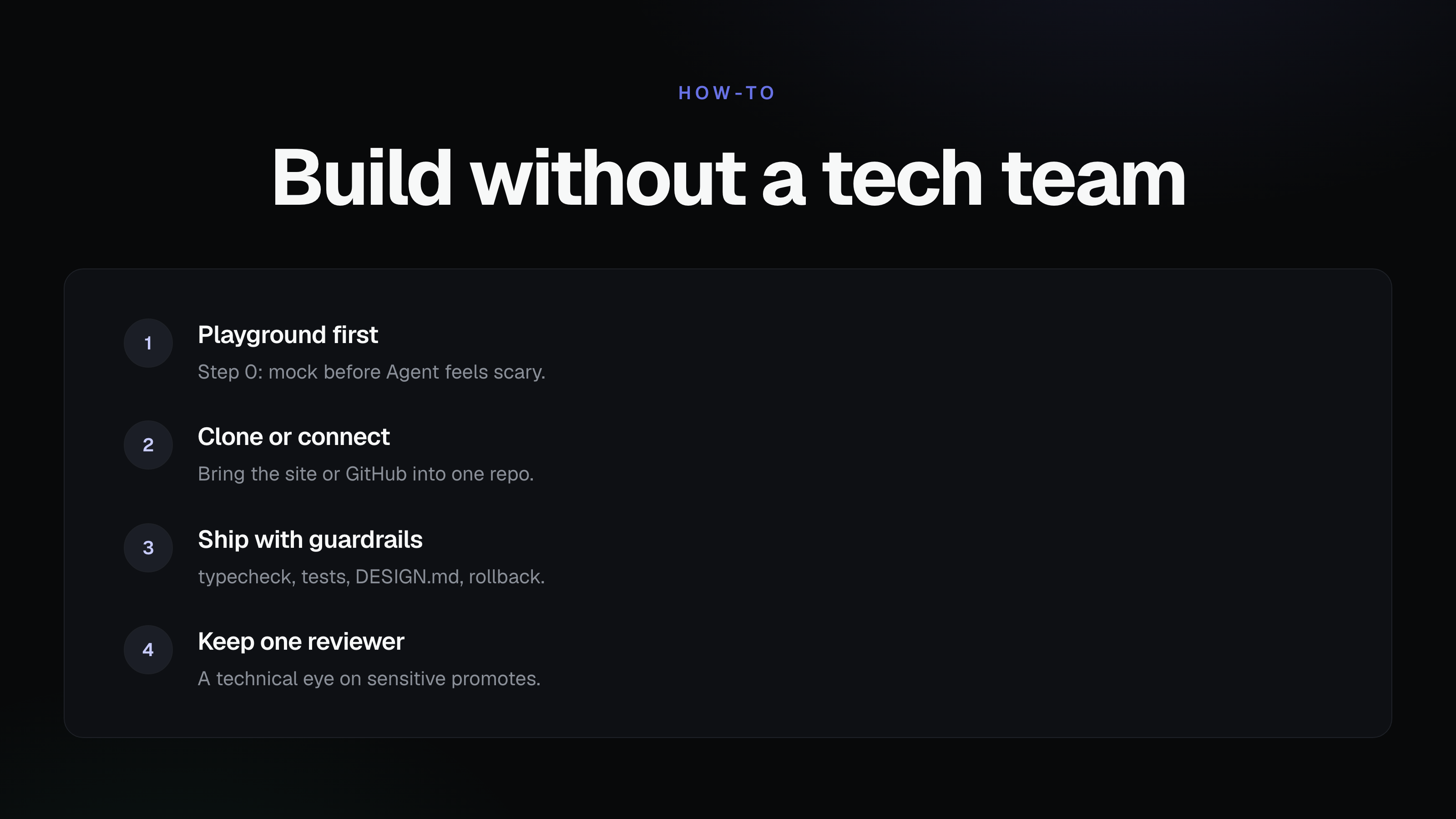
- Click before you build. Vision's design mode gives you fully interactive prototypes by default: buttons navigate, forms accept input, multi-step flows advance, and anything that can't genuinely run in a mock (sending an email, charging a card) is simulated with a visible demo note. This exists because a customer told us reviewing static screens wasn't enough; he wanted to click through the flow before committing to a build. Manus hands you the finished artifact and you find out afterward whether it is what you meant.
- A safe path to production. Internal tools need permissions, review, and deployment guardrails. Vision is built for that lifecycle. A sandbox artifact is not.
- Your whole team iterates on it. Vision is collaborative by design. The tool becomes shared infrastructure, not a file someone generated once.
Built wrong shouldn't cost you
With Manus, a run that goes sideways still consumes credits. The attempt is billed, not the outcome, and you discover problems after the meter has run.
With Vision, builds are verified against the design you approved: the agent compares each built screen against the prototype, checks the app's existing global styles for conflicts that would silently restyle new pages, and if it couldn't visually verify the result, it says so in the first line of its reply instead of shipping silently. And because pricing is flat, fixing a mismatch is just the next message. Iteration never bills you into a hole.
The pricing math
Manus's Extended tier starts at $200/month for 40,000 credits, which still meters every attempt. Vision Team is $49 per user per month with no credits and no meter anxiety. If your team builds and revises tools weekly, the difference compounds fast, and so does the difference in what you end up owning: a folder of artifacts versus a stack of living internal tools.
Vision also shows you exactly where usage goes: the billing page has an itemized per-event log (every prompt, build, and integration call with its own cost, filterable by project and activity) plus a rolling last-30-days view. When one of our own customers found their usage summary confusing, that itemized view is what we shipped the same week. That level of spend visibility is something a metered-credits model structurally can't offer, since credits are consumed by opaque agent decisions you only see afterward.
So, is Manus AI worth it?
If you genuinely need autonomous one-off task execution, Manus remains one of the most capable agents available, and for occasional frontier-style tasks the $20 tier may be fine. Go in with clear eyes about the credit math and the no-refund-on-failure model.
But if you are evaluating Manus AI vs alternatives because you want software your team keeps, pick the category built for it. That is Vision.
FAQ
Is Manus AI free?
There is a limited free tier for trying it out, but real usage requires a paid plan. Paid plans start at $20/month for 4,000 credits, and Manus's own docs price serious tasks at 500 to 1,000+ credits each, so expect the free tier to cover exploration, not actual work.
Why does Manus AI use so many credits?
Credits meter everything the agent does: browsing, compute time in the sandbox, retries, and reasoning steps. Complex or long-running tasks consume more, and failed or looping runs consume credits too, which is the single most common complaint from users.
What is the best Manus AI alternative for internal tools?
Vision. Manus produces one-off artifacts; Vision builds working internal tools connected to a real codebase, with clickable prototypes before you build, a safe path to production, and flat per-user pricing ($49/user/month) instead of credit metering.
Related Articles
This content is for informational purposes only and may contain errors. Please contact us to verify important details.